Freedom of the Press
A Landmark for Free Press
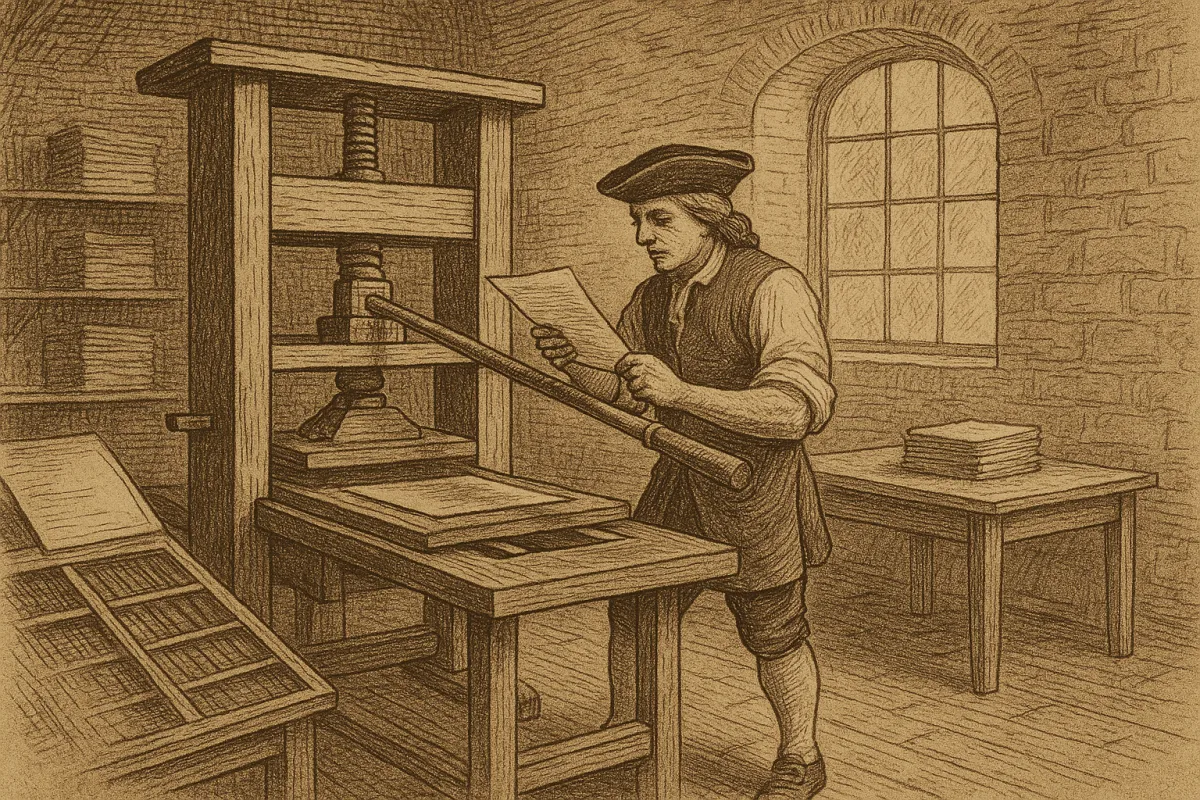
In 1735, a small print shop in New York became the center of a case that would shape the very idea of freedom of the press in America. John Peter Zenger, a German-born printer, found himself at the heart of a courtroom drama that tested the power of government against the voice of the people.
Who Was John Peter Zenger?
Zenger immigrated to the American colonies as a child and learned the printing trade. By the 1730s, he was publishing the New York Weekly Journal, a newspaper often critical of New York’s colonial governor, William Cosby. Zenger’s paper accused Cosby of corruption, tyranny, and mismanagement—accusations that struck a nerve.
The Arrest and Charges
Governor Cosby, angered by the criticism, ordered Zenger’s arrest on charges of seditious libel. At the time, truth was not a defense in libel cases. Publishing anything that undermined government authority was considered a crime, regardless of accuracy.
Zenger spent months in jail awaiting trial, while his wife bravely continued to publish the paper from their shop.
The Trial
At Zenger’s trial, the prosecution argued simply: Zenger printed material critical of the governor, therefore he was guilty. But Zenger’s lawyer, Andrew Hamilton of Philadelphia, made a groundbreaking defense.
Hamilton admitted Zenger had published the articles, but insisted that truth should be a defense against libel. He famously appealed to the jury:
“It is not the cause of one poor printer, but the cause of liberty.”
The Verdict
The jury agreed and acquitted Zenger. Their decision set no immediate legal precedent in British common law, but it established a powerful principle in colonial America: the press has the right to publish truthful criticism of those in power.
Why It Matters
The Zenger trial planted an early seed for American freedom of speech and freedom of the press. Decades later, the First Amendment would enshrine those rights in the U.S. Constitution. Zenger’s story remains a reminder that democratic societies depend on the ability to question and criticize authority without fear of punishment.
